
Saturday, December 3, 2011
Wiki #15: Magazines

Wiki #14: Newspapers
 Newspapers are publications that are released on a consistent schedule, normally daily or weekly. They normally contain reports of current events, informational articles, general interest and diversity stories, editorials, and advertisements. Newspapers normally only cover news for a specific area, such as a town, state, or country. The newspaper will include articles that will be relevant and interesting to the people within those areas, such as criminal activity, weather reports, and events that are occurring in that area. Newspapers are funded through the paid subscription of it's readers and the advertisements featured in it. There are thousands of newspapers in the United States alone, but the numbers are starting to decrease due to the increase of digital means of getting information.
 Wiki #13: iTunes

Wiki # 12:Printing Press
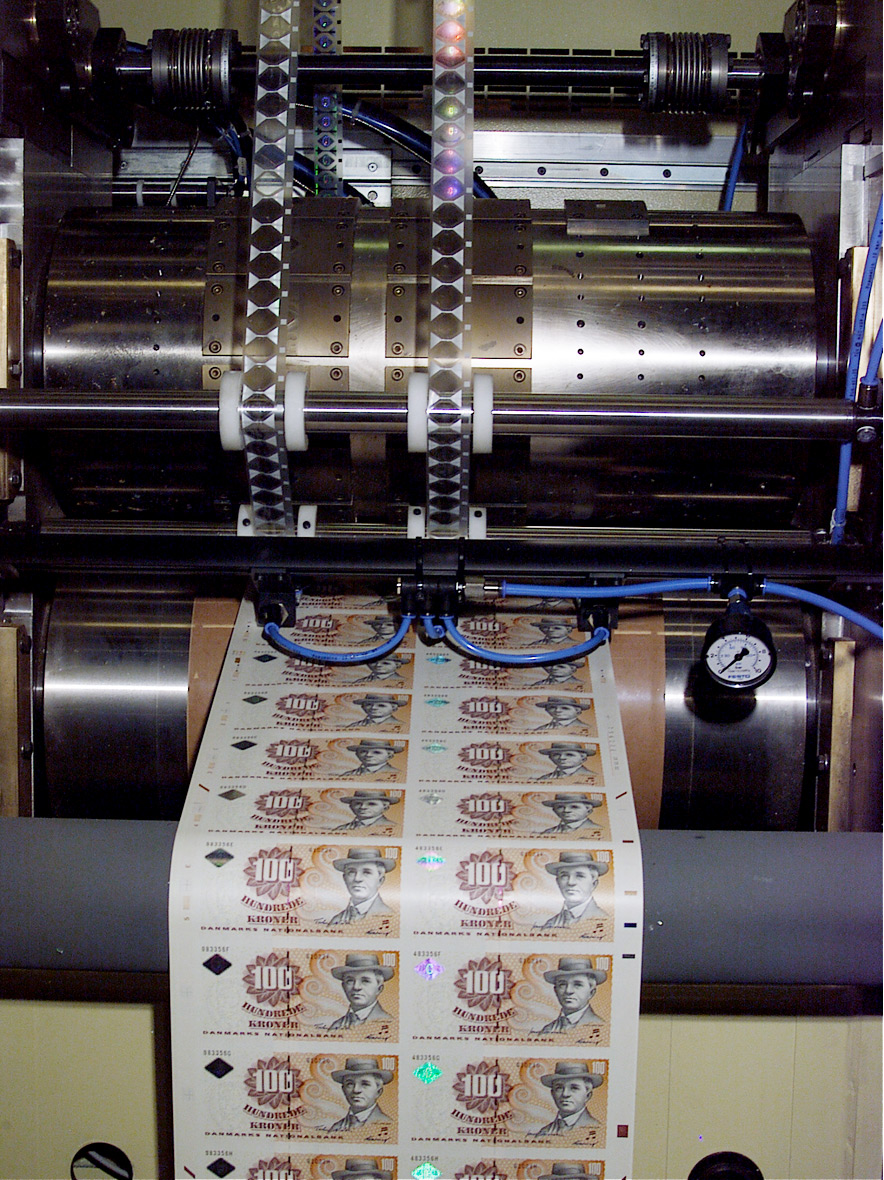 A printing press is a device used to apply pressure to an inked surface resting on a print media, usually paper or cloth. The pressure then allows the ink to be transferred onto the print medium. The printing press was invented by Johannes Gutenberg around 1440. He was the first to come up with an invention that could quickly print material, as well as the first to feature movable type. This allowed books and newspapers to be printed at a much faster rate, making them cheaper and more available. The modern printing press has most of the same fundamentals as Gutenberg's press, but technology has allowed the process of printing to become even faster and easier.
 Wiki #11: Advertisements
 Advertisements are anything that is used to persuade an audience to take an action in regard to the product,service, or idea being advertised. Advertisements are normally used for commercial companies that want people to buy their products or use their service, or in political campaigns to encourage people to vote a certain way. They are most often passed through mass media sources, such as newspapers and magazines.
 Wiki #10: Vedera
Vedera is currently one of my favorite bands. They are from Kansas City, Missouri. I got one of their songs free on iTunes and I really liked it so I bought the rest of the album. The band has four members: Kristen May who does vocal and plays guitar and piano, Brian Little who is the lead guitarist, Jason Douglas who is the bass guitarist, and Drew Little who is the drummer. The band was started by Kristen May and Brian Little.
 May and Little knew each other in high school and began playing in a band together called, Red Authentic, after May returned home following an aborted stint at college in Nashville. “I didn’t want to study music anymore, I just wanted to play it,” she says. In 2003, the band she had formed with her brothers needed a guitarist and they called Little. “He and I clicked and our worlds collided in the greatest way,” she says. With her brothers unable to travel and pursue the career musician life that May and Little craved, they asked Little’s high-school friend Jason Douglas to join and also recruited Brian’s younger brother Drew to play drums. Their first album Stages was released on October 6, 2009 after two years of recording. Some of my favorite songs ion that album include Loving Ghosts, Forgive You, Satisfy, and If You Go.
Source: http://en.wikipedia.org/wiki/Vedera

Source: http://en.wikipedia.org/wiki/Vedera
My Lecture Response
I thought that the lecture was very interesting. I like questions that don’t really have an answer, but make you think, like many of the ones brought up in the lecture. Such as, what would we do if artificial intelligence suddenly gained a conscience and knew that it was something and wanted to live and have rights like other living things do? In a National Geographic article I saw that they are creating robots that look and act like humans, and can relate to humans. They don’t quite have a conscience yet, but what will happen when they do? There is even an organization called LifeNaut that is looking into using robot and human fusion as a way to achieve immortality. So what would happen if a robot did gain life? Would they die eventually just like other living things do? Would they be immortal, making immortality through fusion possible? Would they feel superior to humans and try to gain control over us? Or would humans feel superior since we created them, and use that as power to control them? It is very similar to the issues that can arise with genetic engineering.
Genetic engineering also brings up the questions of who will be superior. In Gattaca the people who are genetically engineered are superior. They have power over those who are not altered, and have more opportunities in life. However, I have read some books by James Patterson that are on the opposite end of the spectrum. In these books, When the Wind Blows and The Lake House, a group of scientists fuse avian and human DNA, among other experimentations, and these children are born with wings. They are human in every way except for the wings and ability to fly. They watch tv, eat cookies, talk to each other, and want to live and be free. However, the scientists that created them don’t view them that way. To the scientists the children are just experiments. Something that can be observed and tested, then disposed of. The children are kept in cages until in a laboratory, with other “experiments” that either die from complications or are killed after they are doing being observed and tested.
So what would happen if genetic engineering or artificial intelligence beings become a reality? Will they become superior to human being? Or will humans see them as experiments that they created and that can be disposed of at any time? And how do we decide if they are experiments or if they are beings. I agree with the statement “The worst part is life is not so cut and dry. This or that. Heads or tails. There are shades of gray.” (Rob Larson, November 30, 2011) What makes them alive and human, instead of just a very advance computer? Or just an animal that is used in a lab, like a guinea pig? Do they have to be able to speak and tell you that they want to live? Do they need to have to be made of flesh and blood? How would you measure if something has a conscience or the ability to think if they weren’t fully human and couldn’t talk? Or would that just mean they didn’t have the right to life? And does it need to be a thing that exists as a physical being in our world? Could it be something digital within a virtual world on our computer or TV?
Another book that I read as a child was Inkheart, by Cornelia Funke. In this book some characters are read out of a story into our world. They had a whole other world that they lived in within the story, in which the reader could only see a portion of. However, parts of their story were already determined, such as important events in their life and their personality. These parts were created by the author of the story and affected the characters life within the story world, but did not make up all of it. When these characters are removed from their world and brought into ours they have no idea that their life is already partially written. For example, one character dies at the end of the book, but he has no idea about this because he is living the story. So that makes me wonder if we are living a story that already has an end. Is someone in another dimension reading about our life, and knowing what will happen before we do? Has someone written out a book for each of us, and their words determine our fate or our destiny? Is that what fate and destiny actually are? Just us experiencing what the author has written will happen to us and what others have already read will happen? How would we know if it was? Because the characters in Inkheart didn’t until they were pulled from their world into the world of their author. They lived and had memories and everything that we have inside their world, in what was a book to us. So couldn’t the same be true for us?
I agree with most of the lecture. I think that there are many things in life that cannot be answered, but should be wondered about. But wondering about them doesn’t make me see the evidence in life, like memories and history that prove that this life is real. It just makes it seem even more likely, in my opinion, that our lives are already predetermined for the most part. That the large events in our lives have already been written down and fate or destiny will lead us to them, and the little details are the things that are not written in the book. The things not put into words, but still a part of our story.
Cited Sources:
Funke, Cornelia. Inkheart. New York: Scholastica, 2003. Print.
Gattaca. Dir. Andrew Niccol. Jersey Films. 1997 Film.
Patterson, James. The Lake House. New York City: Little Brown Company, 2003. Print.
Patterson, James. When the Wind Blows. New York City: Little Brown Company, 1998. Print.
Subscribe to:
Posts (Atom)